




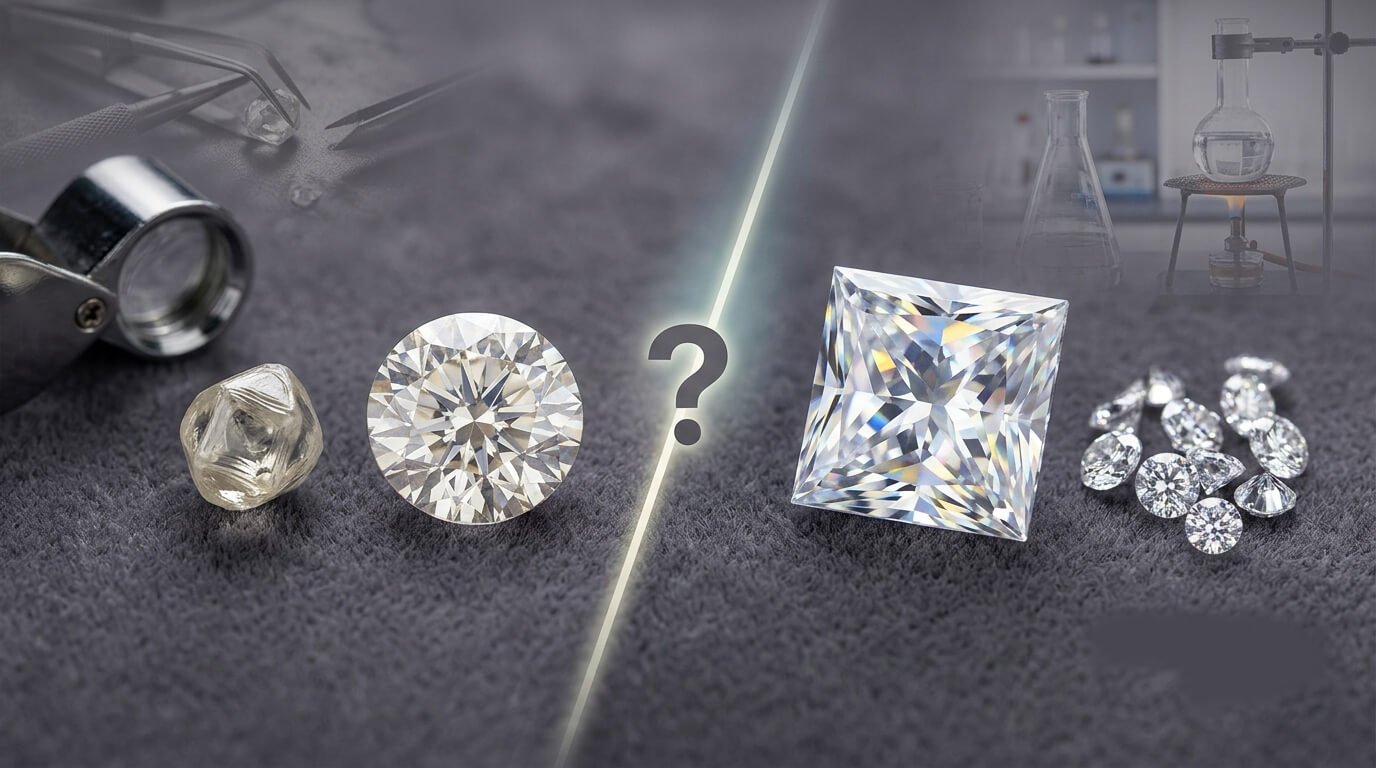
The short answer is yes, cubic zirconia is considered a fake or imitation diamond. However, calling it “fake” can be a bit misleading because it doesn’t imply that the stone is trying to deceive you—it simply means it’s a different material designed to look like a diamond. Let’s break down exactly what that means and why understanding the difference matters.
What Is Cubic Zirconia, Exactly?
Cubic zirconia (often called CZ) is a man-made gemstone composed of zirconium dioxide (ZrO₂). It is a “diamond simulant,” a term used by the jewelry industry for any material that visually resembles a diamond but has a very different chemical composition and physical structure, according to the Gemological Institute of America (GIA) .
This stone was first mass-produced in the 1970s and has since become the most popular and economically important diamond simulant in the world. It is created in a lab by heating zirconium oxide powder to extreme temperatures (around 5,000°F) until it melts, then cooling it to form crystals. Because it is entirely lab-created, it is not a mineral found in nature and has no intrinsic rarity. Explore our premium loose CZ collection to see the quality we offer.
The Key Difference: CZ vs. Diamond
The core distinction is that diamonds are made of pure crystallized carbon, formed naturally over billions of years deep within the Earth. Cubic zirconia is made of zirconium dioxide and is created in a laboratory in a matter of hours or days.
Here are the main differences you can see and feel:
| Property | Diamond | Cubic Zirconia |
|---|---|---|
| Durability | Perfect 10 on the Mohs scale ; hardest natural material | 8 to 8.5 on the Mohs scale; prone to scratching and chipping |
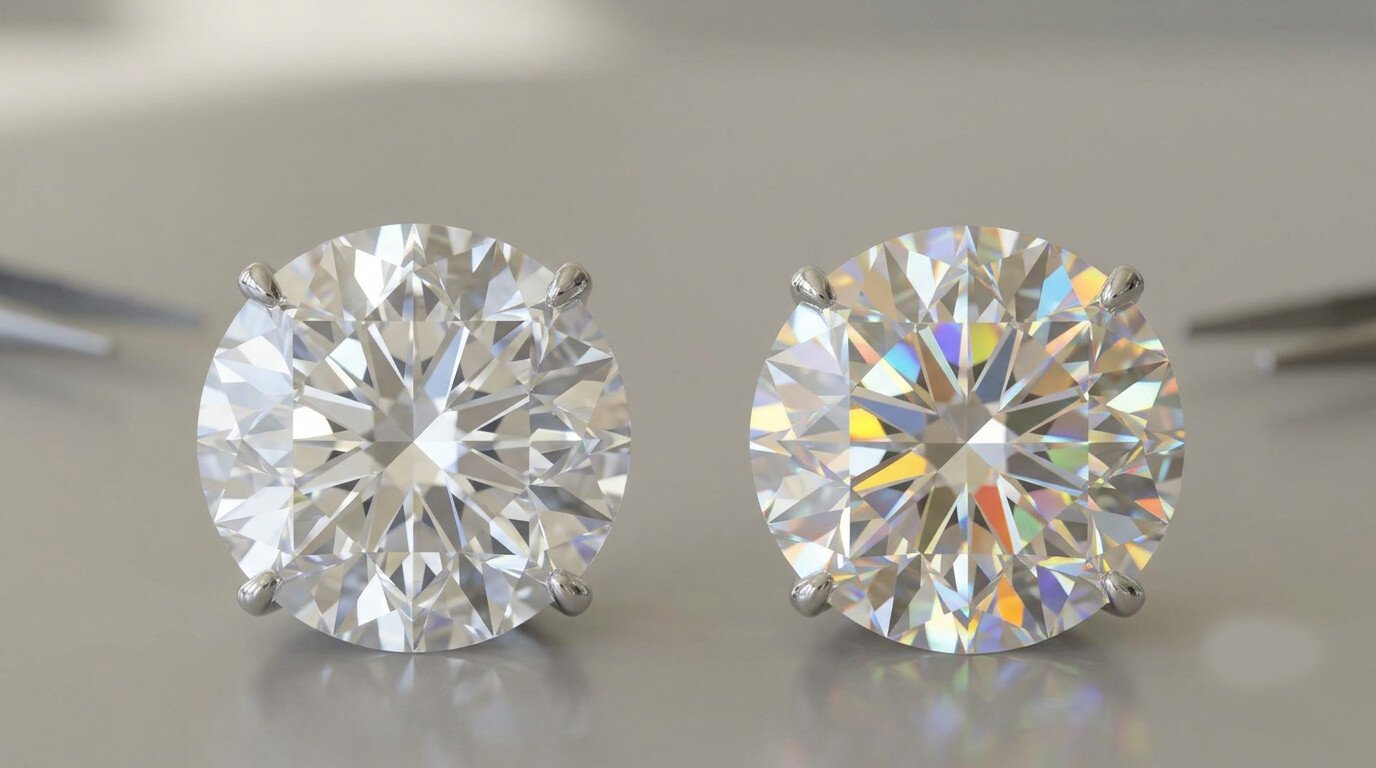
| Sparkle | Brilliant reflection of white light | Higher “fire” —disperses light into colorful rainbow flashes |
| Price | Thousands of dollars per carat | A few dollars per carat |
| Longevity | Lasts a lifetime | About 2 years with daily wear before looking cloudy |
Both are beautiful, but the sparkle is noticeably different to a trained eye. For jewelry brands and designers, we offer wholesale stones with consistent quality for your collections.
Understanding “Fake” vs. “Simulant”
The jewelry industry uses specific terms to avoid confusion:
| Term | Meaning | Example |
|---|---|---|
| Simulant or Imitation | Material that looks like another gemstone but has different composition | Cubic zirconia (looks like diamond, made of ZrO₂) |
| Synthetic or Lab-Grown | Chemically and physically identical to natural gemstone, created in a lab | Lab-grown diamond (made of carbon, same hardness and sparkle) |
Cubic zirconia is a simulant, not a synthetic diamond. It looks like a diamond, but it’s made of entirely different materials. The International Gem Society (IGS) provides a comprehensive guide to understanding these distinctions.
Is Cubic Zirconia a Good Choice?
While this stone is a “fake” diamond in terms of composition and value, that doesn’t mean it’s a bad choice. It is a fantastic option for:
-
Budget-friendly fashion jewelry
-
Travel rings (low risk if lost)
-
Trying out a style before investing in a diamond
It offers a beautiful, conflict-free sparkle at a fraction of the cost. Shop our loose cubic zirconia stones to start your project, or browse our wholesale catalog for larger orders. If you prefer ready-made pieces, explore our finished jewelry collection .
At CZDIA, we believe in providing high-quality CZ so you can enjoy its beauty and affordability with confidence.


 English
  العربية
  Nederlands
  Français
  Deutsch
  Ελληνικά
  Bahasa Indonesia
  Italiano
  日本語
日本語  Português do Brasil
  Português
  Русский
  Español de México
  Español
  Українська
  Tiếng Việt